McClelland’s Motivation Theory and #humanbetter
If you’ve led a team through a complex project, you already know that everybody has ways they can be motivated most effectively. The best leaders I’ve ever worked with understood this and had a way to turn that understanding into action. You can too!
Motivation Theory and HR
Motivation theory in #hr is not new. In fact, it is part of #shrm-cp and #shrm-scp certification exams. There are several models that are frequently evoked, but one that for me captures the most important part of working with humans: integrated development. This integrated development potential is why I am all in for the LINC Personality Profiler and now work with LINC GmbH as a North American lead distributor.

The LPP has taken the most rigorous and empirically proven model (McClelland’s general theory of motivation) and created a very insightful and actionable workplace and team motivation profile. In combination with a Big Five personality profile and a robust competency framework, this motivation profile is a game-changer for team leads of all kinds. But more on that in another blog!
McClelland’s Acquired Needs Theory
McClelland’s theory first. David McClelland (1917-1998) described three needs within a Acquired Needs Theory of motivation, which he published in 1965. Important points to keep in mind here:
everybody has all these motivations to some degree, but might have one that dominates
while the motivations might be influenced by personality, they are *learned* motivations
we can develop any motivation more strongly through awareness and training
we can use motivations to develop behavior change and talent development
we can lean into our people’s motivations to drive performance
Affiliation
The need for affiliation (nAff) is the motivation to establish and maintain friendly relationships with others. People high in nAff desire the approval of others and often conform to the wishes of others. They prefer to work with others rather than alone and in a cooperative work environment and they tend to be sensitive to social cues and are often seen as loyal and collaborative. They are often motivated by:
Acceptance by others
Warm interpersonal connections
Avoidance of conflict or rejection
Group cohesion and shared experiences
High affiliation-oriented people excel in roles requiring relationship-building, customer service, or team cohesion. However, they may struggle with conflict, tough feedback, or competitive environments.
Power
The need for power (nPow) is the motivation to influence the behavior of others. People high in nPow tend to make more suggestions, try to bring others around to their way of thinking, seek positions of leadership, and are driven to create impact and meaning. Power can be viewed as personal (influence, authority) or institutional (social good, collective results). They are often motivated by:
Impacting others’ behavior or thinking
Gaining recognition or authority
Organizing resources or people to accomplish goals
Competing for influence or outcomes
High power-oriented individuals are drawn to leadership, influence, and persuasion. When guided toward organizational goals (rather than self-interest), they can be effective change agents.
Achievement
The need for achievement (nAch) is the motivation to demonstrate high performance levels and high standards of excellence. People who have high nAch prefer tasks that are moderately difficult and tend to have a strong desire for feedback about how they are doing. While they can work well with others, their drive for individual success means they might prefer to work alone rather than with others. They are often motivated by:
Moderate risk and challenge
Immediate feedback on performance
Opportunities to improve or master a skill
Personal accomplishment rather than external recognition
High achievement-oriented people take calculated risks, seek feedback, and focus on task accomplishment. They may not enjoy delegation or group-based work that dilutes personal responsibility.
Trainable, not fixed
McClelland did not view these needs as innate or set in fixed proportions. He argued that individuals have developed different levels of each need based on their background and environment and can become more adept at using the range of motivations. But their core motivations influence quite strongly how people behave in work and social situations, and which types of roles or activities they find motivating.
Now, this theory was not designed for modern corporate L&D or for executive coaching. But anyone who has spent any time thinking about learning design or coaching will immediately see a powerful relevance for how people engage with professional development. The theory describes what we all work for in learning design: participation, persistence, and satisfaction. Designing learner journeys that appeal to different motivational profiles will improve engagement and long-term development outcomes.
Here’s a fun video demonstrating how you might use McClelland’s theory to get different motivational profiles into sales positions. People are somewhat more complex, I’ve found, which is why the LINC LPP model is so powerful.
Discover your Motivational Profile
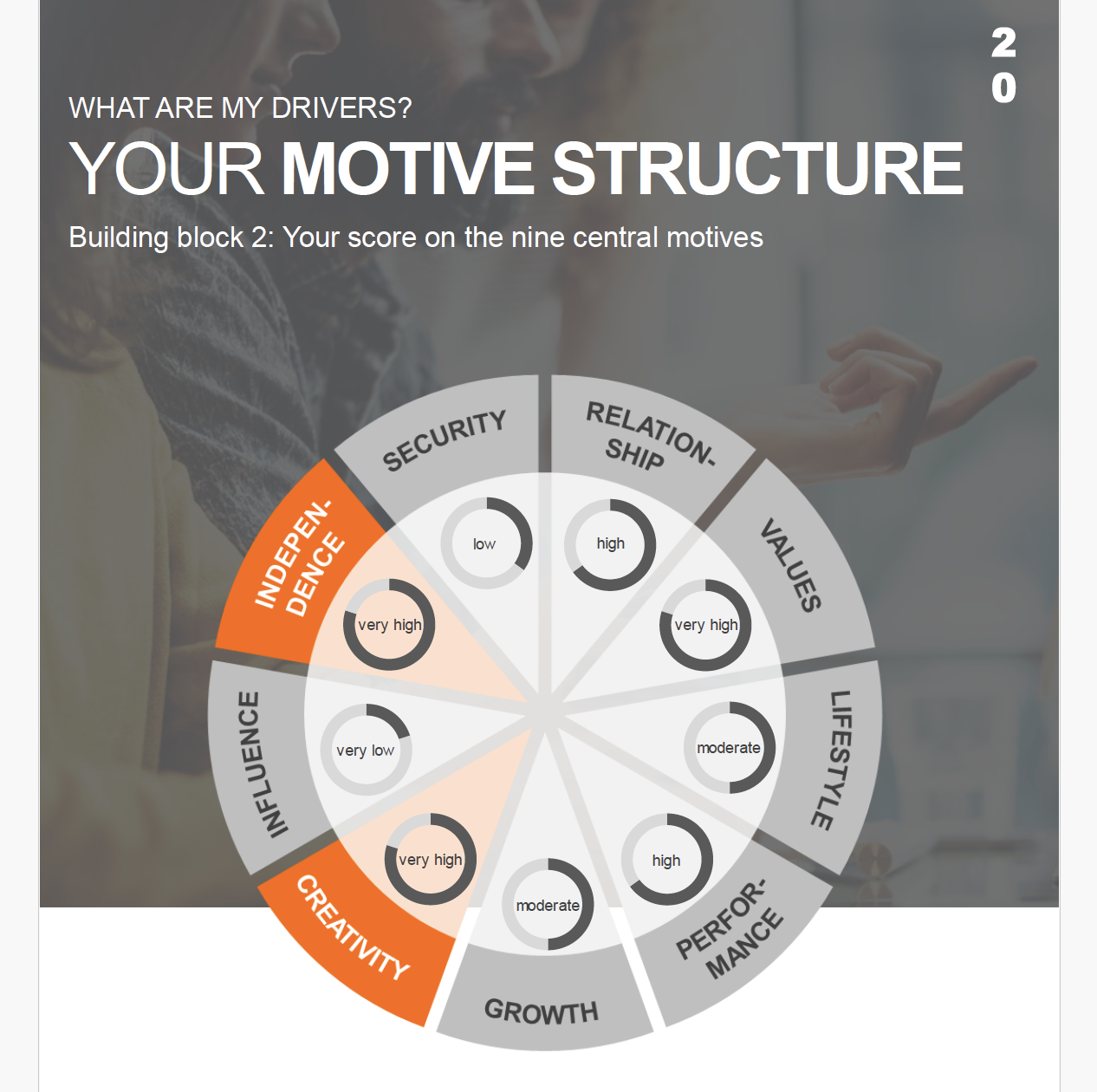
Circular chart of the 9 facets of Motivation
Do you know your primary motivations? Contact me for a discussion about the LPP and how it can transform your L&D and talent development programming. Or, check back soon for how the LPP’s three part system becomes more actionable and nuanced in the LINC profile for leaders, individual contributors and teams!
